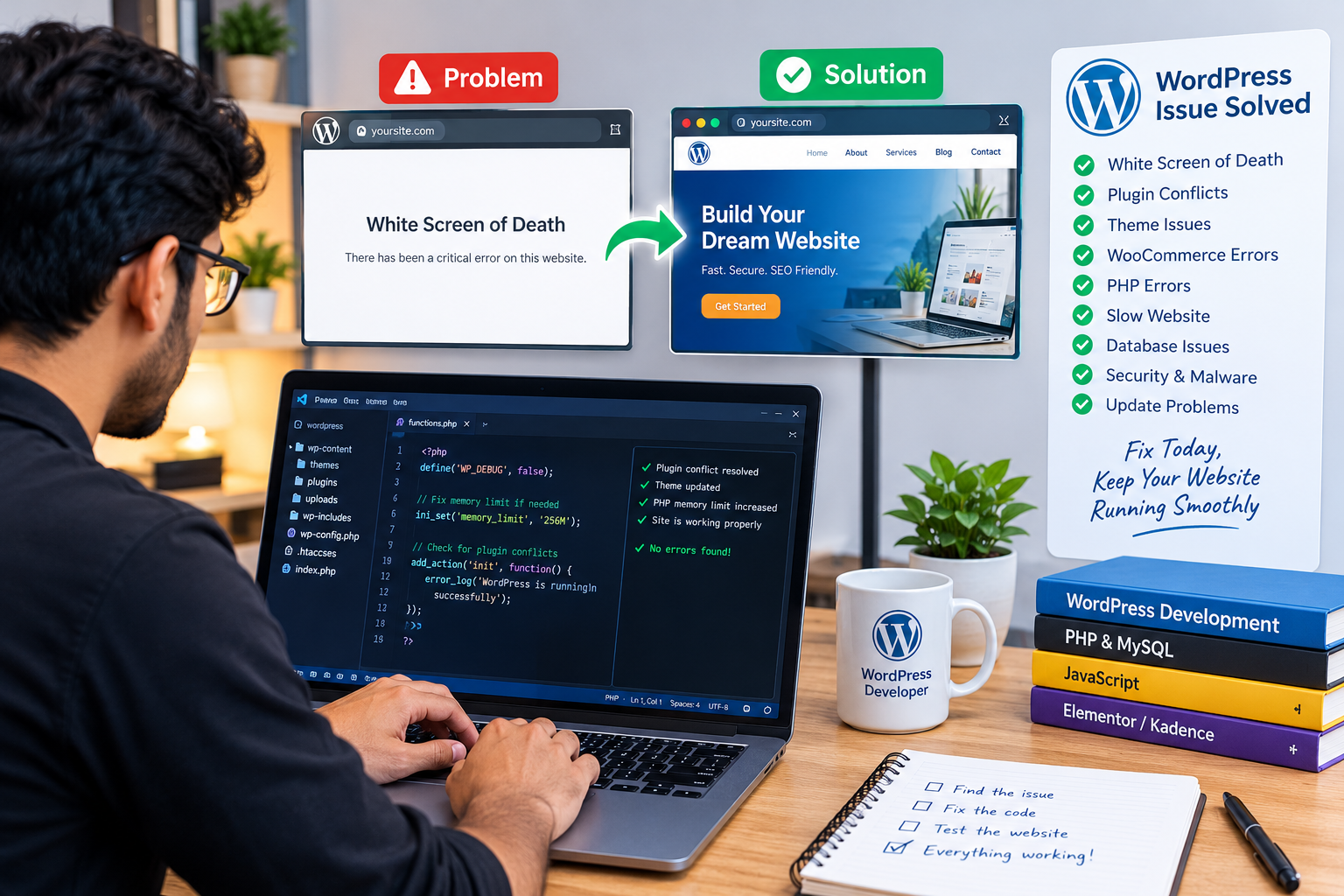
10 Common WordPress Website Problems and How to Fix Them
WordPress is one of the most popular platforms for building business websites, blogs, and online stores. However, website owners may experience technical issues that affect performance, security, user experience, and search engine rankings.
The good news is that many common WordPress website problems can be fixed with the right approach. In this article, we will explore 10 common WordPress problems and practical solutions to help keep your website running smoothly.1. WordPress Website Loading Slowly
A slow website can frustrate visitors and negatively affect user experience. Common causes include oversized images, too many plugins, poor hosting, and unoptimized code.
How to fix it:
- Compress images using WebP or other optimized formats.
- Enable caching with a suitable WordPress caching plugin.
- Remove unnecessary plugins and themes.
- Optimize CSS, JavaScript, and database performance.
2. WordPress White Screen of Death
Sometimes, a WordPress website displays a blank white screen instead of loading correctly. This may happen because of plugin conflicts, theme errors, or PHP problems.
How to fix it: Disable recently installed plugins, switch to a default theme, and check PHP error logs. Always create a backup before making significant changes.
You’re looking for the monthly number or percentage of websites affected by the White Screen of Death (WSOD), comparing WordPress with other website platforms such as Shopify, Wix, Joomla, and custom-built websites.
The main limitation is that research reports usually track general website outages or server errors, not the specific White Screen of Death across every platform.
One useful recent study monitored 505 production websites for seven days in May 2026. It found that 27% experienced at least one detectable error during that week. However, this included different types of errors and was not a WSOD-only statistic.
Sources: WEDOS reliability study and Oh Dear uptime report.
Can we estimate the monthly WSOD rate? Not reliably from these studies. A general website error or outage is not necessarily a white screen, and the studies don’t provide a consistent platform-by-platform comparison.
For your business research, track these four separate problems:
- White Screen of Death and PHP fatal errors
- Plugin, theme, and page-builder conflicts
- Website downtime and server errors
- Slow loading and broken checkout pages
WordPress’s official learning resource confirms that WSOD can result from exhausted memory, PHP errors, database issues, and plugin or theme conflicts.
The most accurate conclusion is that website troubleshooting is a real need, but the number of WSOD cases per month worldwide remains unknown. Use documented client cases and published studies rather than presenting an unsupported percentage as fact.
3. Plugin Compatibility Issues
Plugins extend WordPress functionality, but incompatible plugins can cause errors, broken layouts, or website crashes.
How to fix it: Update plugins carefully, test changes on a staging website, and deactivate plugins individually to identify conflicts.
4. WordPress Login Problems
Website owners may be unable to access the WordPress dashboard because of incorrect credentials, browser issues, security restrictions, or plugin conflicts.
How to fix it: Reset your password, clear browser cookies, and review security plugin settings. If necessary, ask your hosting provider to investigate server-side login restrictions.
5. Broken Website Layout
A WordPress website may display incorrectly on mobile devices or after a theme or page-builder update. CSS conflicts and responsive design issues are common causes.
How to fix it: Check the website on different screen sizes, inspect conflicting CSS rules, and review Elementor or Gutenberg layout settings.
6. WordPress 404 Page Not Found Error
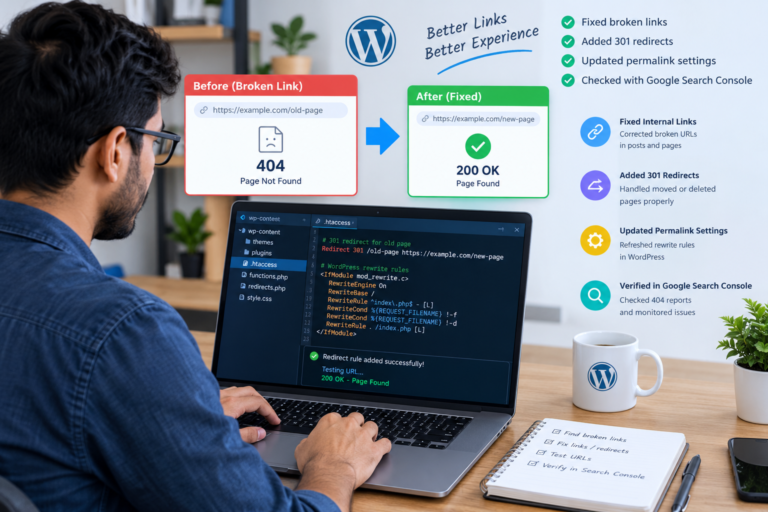
A 404 error appears when a requested page cannot be found. Incorrect permalink settings or missing pages can cause this problem.
How to fix it: Navigate to Settings → Permalinks and click Save Changes. Check whether the page exists and verify your redirects if the issue continues.
7. WordPress Security Vulnerabilities
Outdated software, weak passwords, and insecure configurations can expose a website to security threats.
How to fix it: Keep WordPress, themes, and plugins updated. Use strong passwords, enable two-factor authentication, maintain regular backups, and install a reputable security plugin.
8. WordPress Contact Form Not Sending Emails
Contact forms may work correctly but fail to deliver messages because of email authentication or server configuration issues.
How to fix it: Configure SMTP using a trusted email service, verify your domain’s SPF and DKIM records, and submit a test message.
9. WooCommerce Checkout Problems
Checkout errors can prevent customers from completing purchases. Payment gateway conflicts, caching rules, and JavaScript errors are common causes.
How to fix it: Test the checkout process, review payment gateway settings, inspect browser console errors, and exclude dynamic cart and checkout pages from inappropriate caching.
10. WordPress Website Not Appearing on Google
A website may struggle to appear in search results because of indexing restrictions, poor content, technical SEO problems, or missing internal links.
How to fix it: Check your WordPress reading settings, review your robots.txt file, submit your XML sitemap to Google Search Console, and create helpful, original content targeting relevant keywords.
Fixing common WordPress website problems helps improve website speed, security, usability, and reliability. Regular maintenance and careful troubleshooting can also prevent small technical issues from becoming expensive problems.
If you need help with WordPress bug fixing, Elementor customization, WooCommerce checkout errors, or website speed optimization, working with an experienced WordPress developer can save time and reduce technical risks.
Need help fixing your WordPress website? Contact me to discuss your website issue and find a practical solution for your business.